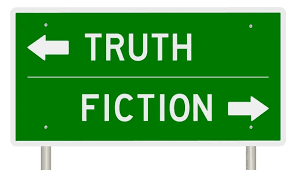
One of the biggest reasons I hesitated to publish my novel Hope in a Time of Dying was because it was inspired by real life, and several of my family members play recognizable roles in the story. I worried that readers would assume the characters were exact portraits of my loved ones, and that every situation described really happened. The truth is, neither assumption is correct.
The earliest version of the book was a memoir. But once I realized I needed the freedom to shape events, heighten conflict, and compress time, I shifted to fiction. That decision allowed my family members to become characters rather than carbon copies of themselves. And because conflict and tension are the lifeblood of any good novel, those characters had to clash in ways that sometimes exaggerated their real-life counterparts. Did they carry some recognizable traits? Absolutely. Were those traits turned up for the sake of the story? Without question.
The same goes for the events. A handful came straight from real life, but most were created to push the narrative forward. That’s how fiction works: we borrow from truth, but we reshape it into story.
Dorothy L. Sayers put it well in The Mind of the Maker:
“We … incline to suppose that a writer can be somehow cabined, cribbed, confined inside one of his ‘favourite’ characters or one of his more impassioned utterances. We try to identify him with this or that part of his works, as though it contained his whole mind.”
Sayers’s words ring true: readers naturally want to map a story back onto the author’s life, even though no single character—or even an entire novel—can contain the whole of who a writer is.
Real life, after all, is more balanced than fiction allows. My family members—like most people—are complex, flawed, and also deeply decent. Characters on the page, by contrast, must carry the weight of conflict and tension. To keep a story alive, they sometimes have to be sharper, messier, or more extreme than their real-life inspirations.
For anyone who writes from lived experience, this is the tightrope: we draw from real people and events, but we reshape them to reveal something larger than memory. That’s both the risk and the reward.
In the end, my hesitation to publish gave way to recognition. Hope in a Time of Dying was never about assigning blame or recreating history. It was about using story to illuminate the hard but necessary truths we all face.
Enough said.

 20 Minutes a Day
Len, I appreciate these words, because my only problem reading the book is that I felt I already “knew” some of these people, so there was some tension between recognizing them and allowing the fiction to be fiction, if that makes sense.
Yes, that makes total sense. This is one of the challenges of writing autobiographical fiction. Most people said they were initially distracted by knowing family members but then the story took over and they let that distraction go. Still, as a writer, it’s a challenge.