Last week, I was climbing on a chair to reach something up high and accidentally bumped my head on one of our collectible cabinets. Immediately, I heard something inside the cabinet fall and break. “Oh, no!” My concern was real though I’d hit a sharp edge of the cabinet and my head still hurt. The broken object inside was an antique ceramic pie bird.
I was sad about that loss because it was an adorable little bird that I had planned to use the next time I made a fruit pie. Pie birds, first used in pre-Victorian times, are placed in the middle of a pie between the bottom and top crusts and their little open mouths allow steam to escape from the inside, preventing the crusts from getting soggy. I’ve never used one and had actually never heard of one until Ray showed me the one he had gotten at an estate sale. Ironically, he had placed the pie bird in the collectibles cabinet for safekeeping until I needed it for my next pie. That was before my head and that sharp cabinet edge collided.
Today, I opened a package that Ray had ordered and, lo and behold, there was a brand new Le Creuset pie bird waiting for me in an orange and white box. The bird is black ceramic with yellow eyes and a bright yellow beak. It is hollow inside, as it should be, and there is a hole in the center of the bird’s beak to allow the steam from a pie to escape. In other words, I’m back in action with my pie-making thanks to my very thoughtful and kind husband.
Thank you, Ray. Buying me a new pie bird was very sweet. I’ll make you a pie just so we can see if this little birdie does its job. I suspect we’re going to enjoy the flakiest pie crust ever.
Below is a photo of my new little pie bird as well as an example of what pie birds look like when they’re doing their job. I’ll report back on my little bird’s effectiveness after I make Ray his pie.
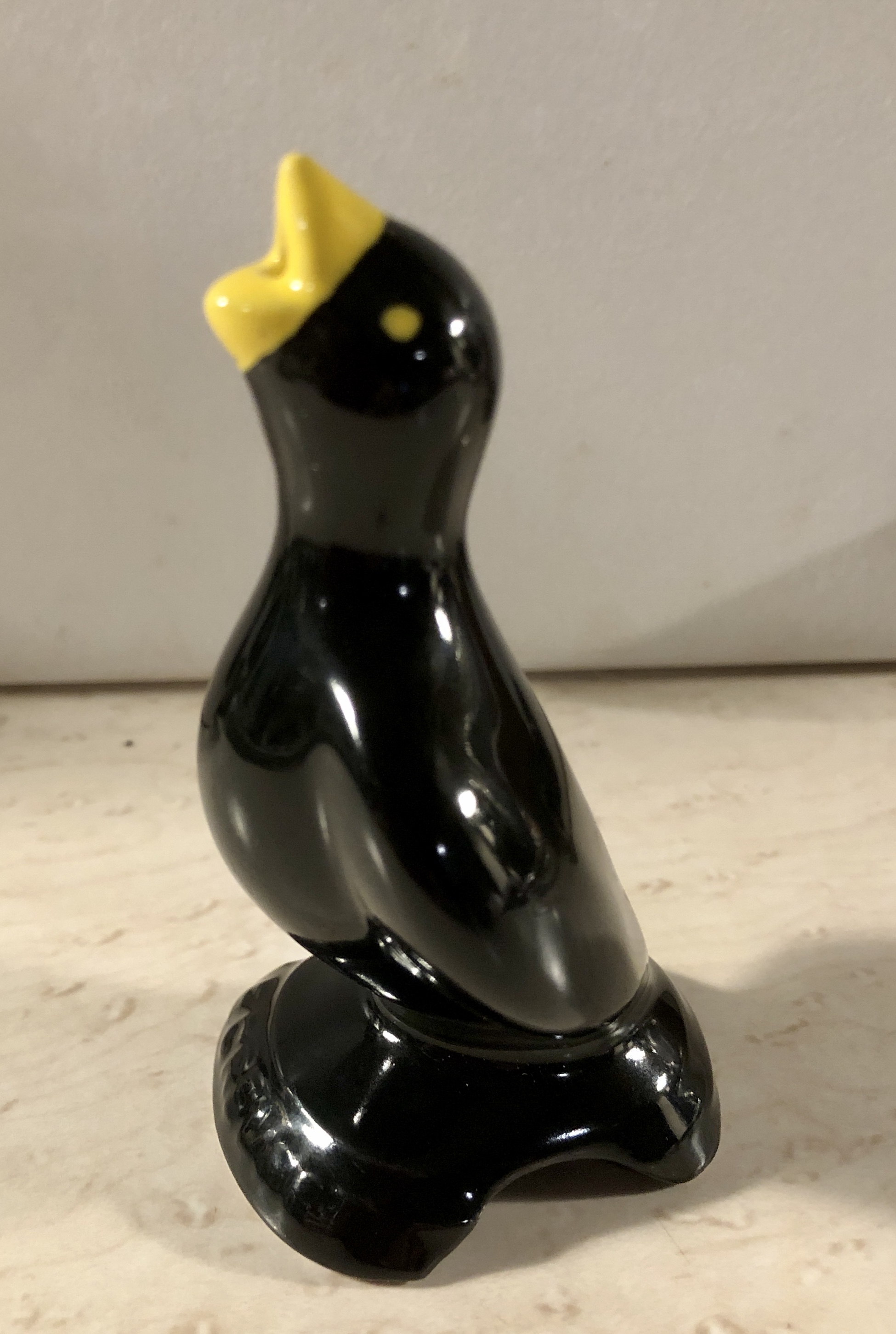
My New Pie Bird

Pie Bird in a Pie

 20 Minutes a Day
So sorry you hit your head! I learned something new from reading this because I had never heard of a pie bird. Thanks!