Over the past two weeks, I have talked with several people dealing with difficult losses. One person has lost his housing and is living at the LA Mission, another has lost her house due to the Altadena fire and is temporarily living in a friend’s guesthouse, another’s elderly mother-in-law unexpectedly died, another’s seemingly healthy younger brother has suffered a cardiac arrest and is currently in a coma. Another’s sibling is in a life-and-death battle with substance abuse. This is without even mentioning the countless people who lost everything they owned in the recent wildfires and others who sadly lost their lives. And then there’s one of my old dear friends who has just been diagnosed with ALS.
What do all of these situations have in common? No easy fixes. No easy answers. No way to pat someone on the shoulder and say, “Don’t worry. It’ll all come out in the wash.”
The truth is, in most of these cases, there’s no way to deal with these things besides walking through the fear, the pain, and the grief, one baby step at a time.
But what is the point, you might ask, of chronicling all this human suffering? We all have our share of difficulties to deal with in this life. We don’t need to add other people’s unfortunate circumstances into the mix.
Except, perhaps we do.
Opening our eyes and ears to the challenges of those among us, known and unknown, helps us remember that life is tentative, fragile, unpredictable, unfair, and sometimes genuinely tragic.
It also helps us to be sensitive to our fellow humans’ trials.
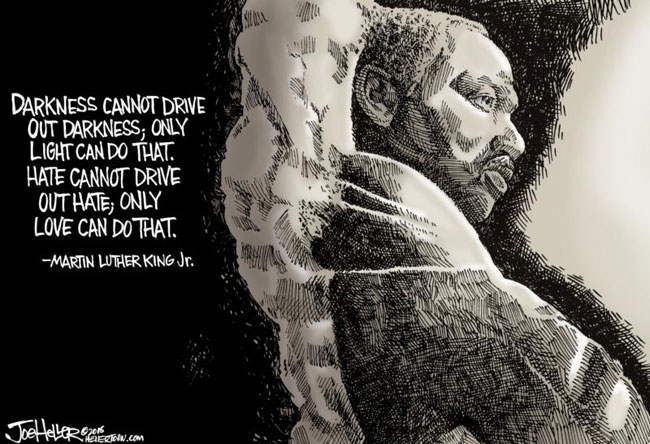
As Martin Luther King, Jr. so eloquently said, “”Darkness cannot drive out darkness: Only light can do that. Hate cannot drive out hate: Only love can do that.”
I hope we will all aspire to follow Martin Luther King Jr’s fine example in these times of trouble, fear, and uncertainty. We can all do our part to be the light and the love. How else can we drive out darkness and hate?

 20 Minutes a Day